TL;DR
Sikhs decorate Sri Guru Granth Sahib Ji, bow to the Guru, do chaur sahib seva, and treat the Granth as the living tenth-and-final Guru. All of this is right. But a Sikh cannot become a true Gursikh through reverence alone. Like a person who never opens a law book cannot become a lawyer, a person who never reads, understands, and applies the Guru's word cannot become what the Guru is calling them to be. The Guru asks more than to be decorated. The Guru asks to be heard.
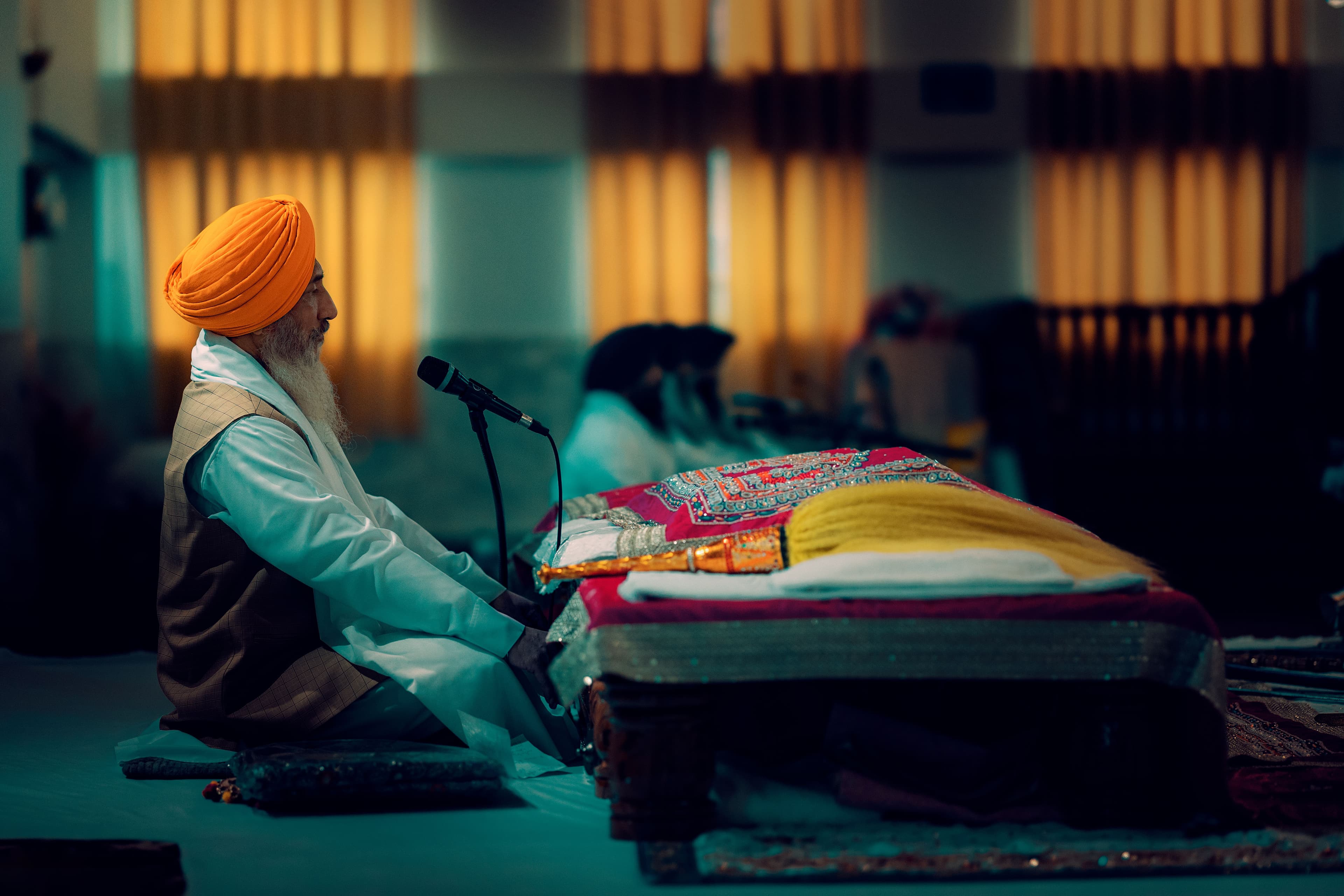
Walk into any gurdwara and you will see Sri Guru Granth Sahib Ji honored with the full reverence due to a living Guru. The palki sahib is draped in rumalas of silk and brocade. Fresh flowers are placed. The chaur sahib waves over the Guru. Sikhs bow on entering, sit cross-legged below, do not turn their backs as they leave.
This is right. The tenth Guru himself instructed it. Sri Guru Gobind Singh Ji declared Sri Guru Granth Sahib Ji as the eternal Guru of the Sikhs — not a book, not a scripture, the Guru. Treating the Granth as a living Guru is not Sikh sentimentality. It is Sikh theology, given by the tenth Guru himself.
But the question worth asking, with full respect for everything described above, is this:
What does one do with a living Guru?
A living Guru is not honored only with garlands. A living Guru is listened to. A living Guru is asked questions. A living Guru is studied, returned to, argued with internally, applied to the small decisions of daily life. The disciple of a living Guru reads what the Guru has written, learns what the Guru has taught, and slowly — over years — becomes shaped by it.
The decoration is the beginning of reverence. It is not the substance.
The lawyer who never opens the book
Consider what it would mean for a person to deeply respect the law, attend every court session in their city, dress in the robes of an advocate, decorate their office with leather-bound legal volumes — but never read a single page of law. Such a person could not represent a client. They are not a lawyer. They love the idea of law without doing the work the law requires.
Consider the same of a doctor who reveres medicine, who decorates their clinic with anatomical charts, who lights incense to Hippocrates — but who never studies disease, never reads diagnostic manuals, never applies what medicine teaches. Such a person cannot heal. The reverence is real; the practice is absent.
This is harsh language because the comparison is harsh. But the structure of the question is the same when applied to Bani.
A Sikh who reveres Sri Guru Granth Sahib Ji but does not read it — does not understand its teachings, does not recite its compositions, does not let its wisdom shape decisions — has the same problem. The reverence is real and beautiful. But reverence alone does not make a Gursikh. The Guru's job is to teach. The disciple's job is to learn.
If we never read the teaching, what is the relationship?
What the Guru asks
The Guru does not ask for elaborate seva at the expense of understanding. The Guru does not ask for chaur sahib while the meaning of the verse being read goes unheard. The Guru asks for both — the reverence and the comprehension. The bow and the study. The decoration and the deep listening.
ਸਤਿਗੁਰ ਕੀ ਬਾਣੀ ਸਤਿ ਸਰੂਪੁ ਹੈ ਗੁਰਬਾਣੀ ਬਣੀਐ ॥ The Word of the True Guru is the embodiment of Truth; through Gurbani, one becomes one with the Guru.
The verse is precise. Through Gurbani — not through the rituals around it, but through the Word itself — one becomes one with the Guru.
This is why reading matters. This is why understanding matters. This is why the diaspora child who cannot read Gurmukhi must find a way — through English, through translation, through transliteration, through whatever bridge works — to actually engage with what the Guru said. Without that engagement, the Guru is honored but not received.
The harder seva
The visible seva is the easier path. Folding rumalas, polishing the palki, doing chaur sahib for an hour, bringing flowers — these are tangible, observable acts of love. They are good and should continue.
The harder seva is opening Sri Guru Granth Sahib Ji and reading it. Sitting with a single shabad for twenty minutes. Looking up the meaning. Asking what it requires of you. Returning to it next week, next month, next year, as your life changes and the same verse reveals something new. This seva is invisible. No one in the gurdwara sees you doing it. There is no rumala fold to admire afterward.
But this is the seva the Guru actually requested.
The Guru did not say honor me. The Guru said:
ਪੜੀਐ ਨਾਹੀ ਭੇਦੁ ਬੁਝੀਐ ਪਾਵਣਾ ॥ It is not by reading alone, but by understanding, that one obtains realization.
Even reading is not enough. Understanding is the bar. And understanding is impossible without first reading. And reading is impossible without the willingness to set aside the comfort of decoration as the full of the relationship.
A note for the diaspora
This is especially important for diaspora Sikhs. Many of us grew up in homes where the rituals were observed faithfully but the Guru's words were never taught in a language we could fully grasp. We watched our parents bow. We watched seva done with great care. We sat through paths whose Punjabi we did not entirely understand.
We learned to revere. We did not always learn to listen.
This is the work of our generation. Not to abandon the reverence — never that. But to add to it the comprehension our parents could not always give us. To read in English when we cannot read Gurmukhi. To slowly learn the script when we are ready. To make Sri Guru Granth Sahib Ji not only the Guru we bow to, but the Guru we consult — daily, deeply, with the urgency of someone who has finally realized the Guru has been waiting to be heard.
The decoration was the beginning. The reading is the path.
ਵਾਹਿਗੁਰੂ ਜੀ ਕਾ ਖਾਲਸਾ ॥ ਵਾਹਿਗੁਰੂ ਜੀ ਕੀ ਫਤਿਹ ॥