TL;DR
Sri Guru Nanak Dev Ji teaches that God does not live in the jungle, the cave, the mountain, the pilgrimage site, or the abandoned family home of the renunciate. God lives within. The Guru uses the image of the kasturi mirag — the Himalayan musk deer — which carries a powerful fragrance inside its own body and runs frantically through forests trying to find the source, never realizing the scent is coming from itself. Most spiritual seeking is this deer. The Guru is asking us to stop running and look inside.
ਘਰ ਹੀ ਮਹਿ ਅੰਮ੍ਰਿਤੁ ਭਰਪੂਰੁ ਹੈ ਮਨਮੁਖਾ ਸਾਦੁ ਨ ਪਾਇਆ ॥
Within the home itself, amrit fills to overflowing — but the self-willed do not taste it.
— Sri Guru Amar Das Ji, Sri Guru Granth Sahib Ji, Ang 644
The deer that searches for itself
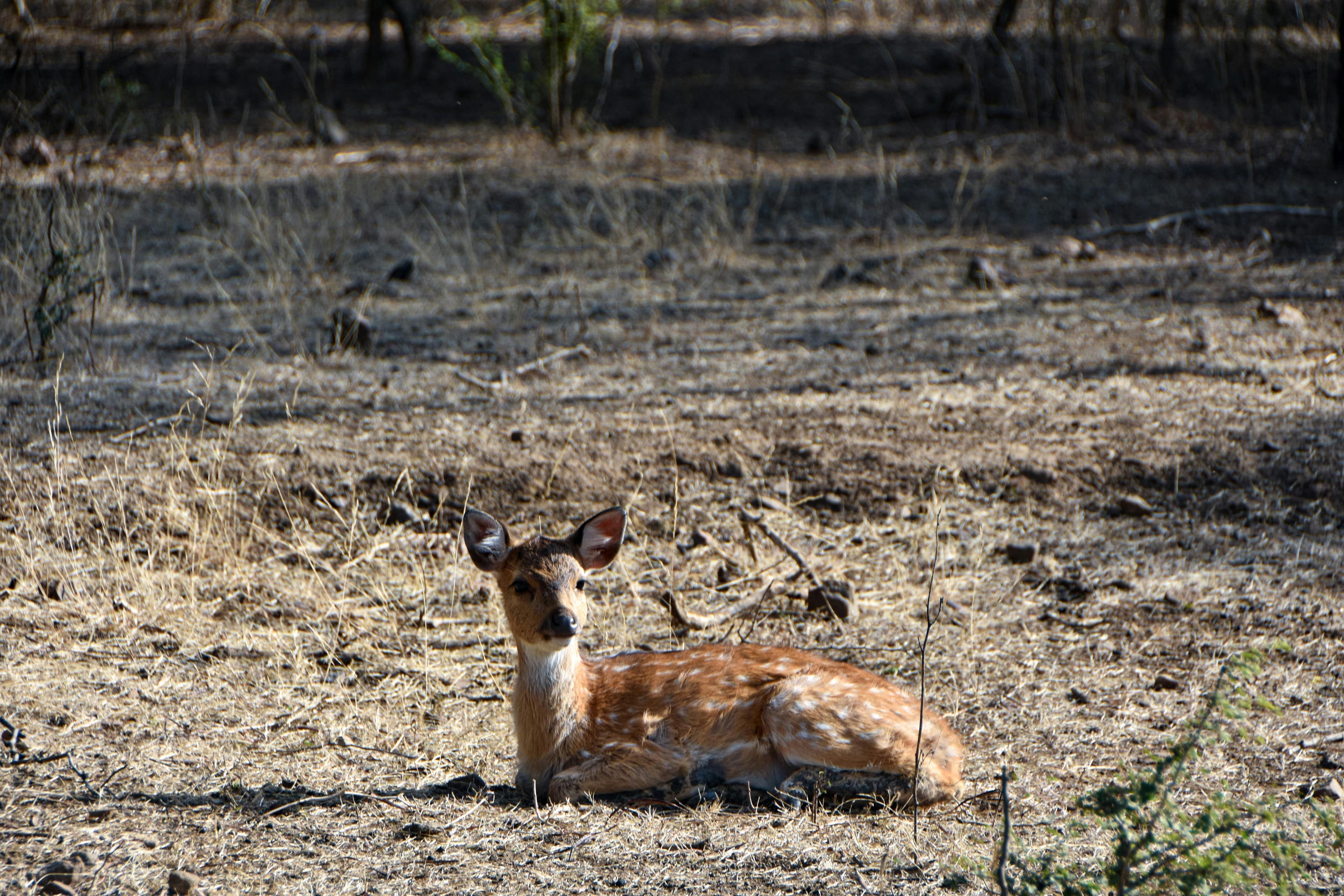
In the Himalayan forests of Uttarakhand, Himachal, Nepal, and Kashmir, there lives a small deer called the kasturi mirag — the musk deer. The male of this species carries a powerful fragrance gland that produces kasturi, the musk so valued in perfumes that the deer has been hunted nearly to extinction for it.
The deer carries this fragrance within its own body. It does not know this.
What the deer experiences is the scent — overwhelming, intoxicating, everywhere around it. The deer runs through the forest trying to find the source. It searches behind trees. It crosses streams. It climbs to higher ground. The scent is always with it, always near, and the deer never stops running, because the deer believes the scent must be coming from somewhere else — some other tree, some other valley, some other place it has not yet looked.
The deer runs until it dies of exhaustion, still seeking the fragrance that was inside it from the moment it was born.
Sri Guru Nanak Dev Ji uses this image to describe most spiritual seeking.
What we do instead of looking inside
The forms of running are familiar.
Some people abandon their families and go to the jungle. They believe God will be found in solitude — in caves, in mountains, in forests far from human concerns. Centuries of Indian spiritual tradition have honored this path, and Sri Guru Nanak Dev Ji is not dismissing the longing behind it. But the Guru is asking: what are you running from, and what makes you think the One you seek is not where you already are?
Some people travel from pilgrimage to pilgrimage. Haridwar, Kashi, Mecca, Jerusalem, Amritsar. They believe God lives in the holy places, and that distance from those places is distance from God. Sri Guru Nanak Dev Ji himself traveled extensively — his Udasis took him from Tibet to Baghdad to Sri Lanka. But the Guru's teaching from those journeys was not "go to these places." It was the opposite: the One you seek there is also here, in you, now.
Some people give up the world entirely. They become renunciates, wearing robes of detachment, leaving wives and children and parents to pursue God in austerity. Sri Guru Nanak Dev Ji's life and teaching firmly rejected this path. He married. He raised children. He worked the fields at Kartarpur. He insisted that the householder's life — grihastha — was the proper field for spiritual realization, not the jungle.
All of this running, the Guru is saying, is the kasturi deer's running. The thing being sought is inside the seeker, not at the destination.
What's inside us
The verse from Sri Guru Amar Das Ji is precise:
ਘਰ ਹੀ ਮਹਿ ਅੰਮ੍ਰਿਤੁ ਭਰਪੂਰੁ ਹੈ ॥ Within the home itself, amrit fills to overflowing.
Ghar here means home, but in the Sikh sense it also means the body, the heart, the inner dwelling. The body is the home. The heart is the home. And inside this home, amrit — the nectar of the Divine — is not scarce. It is bharpur, overflowing. Not rationed. Not given only to the deserving. Already there, in abundance, in every Sikh and every human.
The reason most people do not taste it, the Guru says, is manmukha — turning the face outward, toward the world's attractions, toward the running. The mind oriented outward cannot taste what is inside. Not because it isn't there, but because the attention is pointed the wrong way.
The musk deer's eyes are pointed outward. So are most of ours.
What the Guru asks
Sri Guru Nanak Dev Ji is not asking us to stop seeking. He is asking us to change the direction of the seeking.
The same energy that goes into running through forests, climbing pilgrimage steps, performing austerities, abandoning families — redirect it inward. Not by becoming a hermit. Not by quitting your job. Not by leaving the householder's life. By turning the attention, in the middle of an ordinary day, toward what is already here.
The breath. The heartbeat. The quiet space behind thought. The presence that watches the day unfold. The same God you sought in the jungle is already breathing in you. The same amrit you hoped to find at the pilgrimage site is already overflowing inside.
This is what simran — remembrance — actually means. Not a louder or longer recitation. A turning of attention from the running-outward to the noticing-inward. The Naam is not somewhere else. The Naam is the deer's own fragrance, finally smelled at its source.
The diaspora version of the running
For diaspora Sikhs, the running has its own forms.
We travel to India to visit the Golden Temple, hoping to feel something there we cannot feel in Brampton or Slough or Fresno. We read books about Sikh history hoping the knowledge will produce the connection. We attend gurdwara more often, do longer paths, take up new vows. We tell ourselves: once I do more, once I read more, once I visit more — then the relationship will be real.
None of this is wrong. Some of it helps. But the Guru's quiet warning is: the relationship is already real, and you are running past it on the way to building it.
The kid praying quietly in a Toronto basement at 6am has the same access to the Divine as the pilgrim at Harmandir Sahib. The auntie reciting Sukhmani in her kitchen in California has the same access as the granthi in Amritsar. Not because the holy places don't matter — they do, in their own way — but because the One being sought there is also fully here, in the basement, in the kitchen, in the body, in the breath.
The deer can stop running. The fragrance was never elsewhere.
The small practice
How do you actually turn inward, in an ordinary day, without becoming a hermit?
You do not need to. The work is small.
A pause before opening your eyes in the morning, to notice the breath that has been moving without your help all night. A moment before eating, to acknowledge that the food and the body that receives it were both given. The quiet recognition, sometime during the day, that the same presence which was in Sri Guru Nanak Dev Ji's body is in yours — not less, not differently, not waiting elsewhere. Already here, already overflowing, already amrit.
The deer's tragedy is not that the fragrance was hard to find. It was that the deer never stopped running long enough to notice the fragrance was its own.
Sri Guru Nanak Dev Ji is asking us, gently, to stop.
ਵਾਹਿਗੁਰੂ ਜੀ ਕਾ ਖਾਲਸਾ ॥ ਵਾਹਿਗੁਰੂ ਜੀ ਕੀ ਫਤਿਹ ॥